Ask ten homeowners what size dumpster they need and most of them will guess. That's fine. You rent one of these things maybe once every few years, usually in the middle of a project you're already stressed about. The problem is that guessing wrong costs money in one of two ways: rent too small and you're paying for a second haul, or rent too big and you've got a half-empty container eating up your driveway for a week. This guide walks you through how to size a roll-off dumpster the way we'd talk you through it over the phone, so you can book with some confidence.
What a "Yard" Actually Means
When we say a 20 yard dumpster, we're talking about cubic yards of volume, not the length of the box or the distance across your yard. One cubic yard is a cube three feet on every side. Picture a cube a little taller than your kitchen counter in all directions. That's one yard of space.
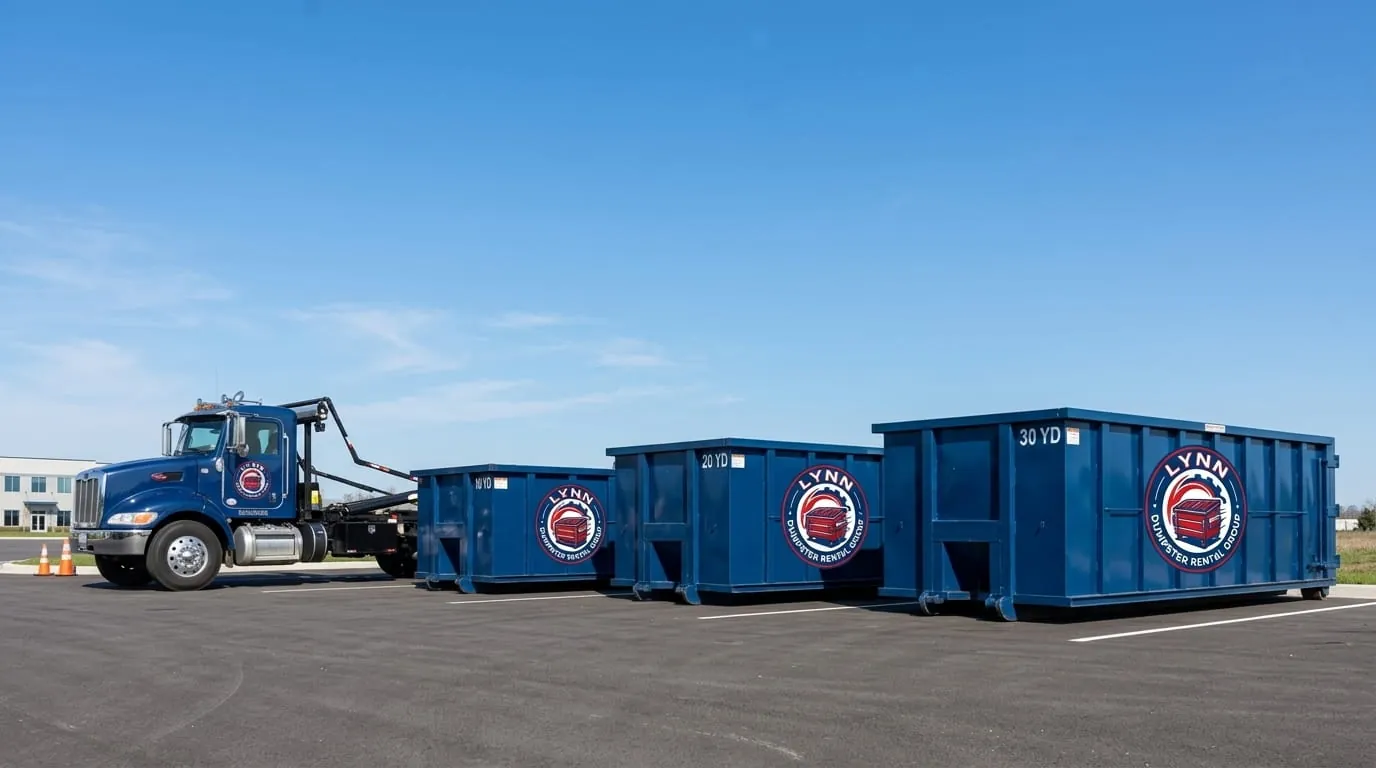
The easiest way to make that real is to think in pickup-truck loads. A standard full-size pickup bed, loaded level, holds right around two to three cubic yards of debris. So a 10 yard dumpster swallows roughly three to four truckloads, and a 30 yard holds close to nine. Keep that mental picture handy as you read on. It's a lot more useful than the raw number on the side of the container.
The Part Most People Miss: Volume vs. Weight
Here's the single most important thing to understand before you book, and it trips up more homeowners than anything else. Every dumpster has two separate limits, and you can hit either one first.
- Volume is how much space the container holds, measured in those cubic yards.
- Weight is how many tons of material you're allowed before overage fees kick in, because the truck and the landfill both charge by the ton.
For light, bulky junk, an old sectional, cardboard, deck boards, general house clean-out, you'll almost always run out of space long before you run out of weight. For dense material, it's the opposite, and it's the opposite in a hurry. Concrete, brick, dirt, asphalt shingles, and tile are heavy enough that a dumpster can look two-thirds empty and already be over its weight allowance.
Quick tip: a single square of asphalt shingles (a 10x10 foot area of roof) weighs somewhere around 250 to 400 pounds once it's torn off. Twenty squares off an average roof can push two to three tons on its own. That's why we steer roofing and concrete jobs toward smaller containers with weight built in, not bigger ones.
This is exactly why heavy debris usually rides in a 10 or 15 yard box rather than a 20 or 30. If your project is mostly clean concrete or masonry, take a look at our concrete and heavy debris service, and if you're tearing off a roof, our roofing dumpster rental page explains how we handle the weight side of things. When in doubt, call us at (781) 560-9348 and describe the material. We'll tell you straight whether weight or volume is your limiting factor.
The Four Common Sizes at a Glance
Dimensions vary a little by manufacturer, but the containers we run on the North Shore land close to these numbers. Use this as your starting point.
| Size | Rough Dimensions (LxWxH) | Pickup-Truck Loads | Typical Weight Included | Best For |
|---|---|---|---|---|
| 10 yard | 12 x 8 x 3.5 ft | 3-4 | ~2 tons | Concrete, dirt, small demo, single-room cleanout |
| 15 yard | 16 x 7.5 x 4.5 ft | 5 | ~2-3 tons | Roofing, medium remodels, garage or basement |
| 20 yard | 22 x 8 x 4.5 ft | 6 | ~3 tons | Larger renovations, flooring, big cleanouts |
| 30 yard | 22 x 8 x 6 ft | 9 | ~4 tons | Whole-home projects, additions, construction |
Notice the 20 and 30 share the same footprint, 22 feet long by 8 wide. The 30 is just taller. That matters for driveway fit, which we'll get to.
10 Yard: The Heavy-Debris and Small-Job Workhorse
The 10 yard dumpster is short, low, and easy to load by hand. It's the default choice for anything dense, a demolished patio, a busted concrete walkway, a bathroom gut, because its lower volume keeps you from accidentally overloading a bigger box past its weight limit. It's also perfect for a focused single-room cleanout where you don't need much space but you do need to get rid of stuff this weekend.
15 Yard: The Underrated Middle Child
People forget the 15 yard dumpster exists, and it's often the smartest pick. It gives you meaningfully more room than the 10 while still carrying a sensible weight allowance, which makes it a favorite for asphalt shingle tear-offs and mid-size remodels. If your project sits awkwardly between "small" and "big," this is usually where the value is.
20 Yard: The Renovation Standard
The 20 yard dumpster is the one we drop off most often for homeowner renovations. Kitchen remodel, flooring across the first floor, a serious garage-and-basement purge, it handles the bulky mixed debris those jobs generate without you having to Tetris every last board. It's roomy without being oversized for a typical residential lot.
30 Yard: When the Whole House Is in Play
Reach for the 30 yard dumpster when you're doing a full-house cleanout, a large addition, or new construction that throws off a lot of light, bulky material. Just remember what we said about weight: the 30 is built for volume, not for filling with concrete. Load it heavy and you'll blow past the weight cap while the box still looks half full.
Matching the Dumpster to Your Project
Sizing gets a lot simpler once you name the job. Here's how we'd point you in most cases:
- Concrete, brick, or dirt removal: 10 yard, no question. Weight is your ceiling here.
- Roof tear-off (single layer, average home): 15 yard is the sweet spot for the shingle weight.
- Bathroom or small kitchen remodel: 10 to 15 yard depending on how much tile and old cabinetry is coming out.
- Full kitchen remodel or main-floor flooring: 20 yard.
- Whole-home decluttering, estate cleanout, or moving purge: 20 yard for most homes, 30 if the whole place is packed.
- New construction, additions, or major demo: 30 yard for the bulk, sometimes paired with a 10 for the heavy stuff.
Still not sure which bucket you fall into? That's what we're here for. A two-minute call to (781) 560-9348 and a quick description of what you're throwing away is usually all it takes to nail the size.
Don't Forget the Driveway
Around Lynn and the rest of the North Shore, a lot of us are working with tight, sloped, or shorter driveways, especially in the older neighborhoods near downtown and up toward the Diamond District. Both the 20 and 30 yard containers need about 22 feet of clear length plus room for the truck to swing and set it down, so measure before you assume the big one will fit. If your driveway is short, a 15 yard often drops in where a 20 simply won't, and you avoid the box hanging into the sidewalk or the street.
A few practical things worth checking:
- Leave overhead clearance, low branches and utility lines get in the way of the truck raising the container.
- Point out any soft asphalt or a driveway you're precious about; we can lay down boards under the rollers.
- If it has to go in the street, some Lynn and North Shore blocks require a permit, and we can walk you through that.
When to Size Up and When to Hold Back
The instinct is almost always to go bigger "just in case." Sometimes that's the right move, projects tend to uncover more junk than you planned, and one right-sized haul beats two undersized ones. But if your debris is heavy, going bigger does nothing for you, because you'll hit the weight limit regardless of how much air is above the pile. In that situation the smarter play is the smaller box with the appropriate weight allowance, or two smaller loads.
The honest answer is that the right size depends on your specific pile, your driveway, and how dense the material is, and that's genuinely hard to eyeball from a blog article. So use this as your starting framework, then let us sanity-check it. Give us a call at (781) 560-9348 or reach out through our contact page, and we'll get the right container in your driveway the first time, no upselling, no guessing.
Founder, Lynn Dumpster Rental Group — sharing straight advice from more than 15 years of local hauling experience.
Frequently Asked Questions
What size dumpster do I need for a home cleanout?
For a typical single-room or garage cleanout, a 10 or 15 yard dumpster usually does the job. For a whole-home cleanout, an estate clearing, or a big moving purge, most Lynn homeowners are better off with a 20 yard, stepping up to a 30 yard only if the entire house is packed. When in doubt, call (781) 560-9348 and describe what's coming out.
What's the difference between a dumpster's volume and weight limit?
Volume is the physical space inside the container, measured in cubic yards. Weight is how many tons of material you can put in before overage charges apply, because disposal is billed by the ton. Light, bulky junk fills the space first, while heavy debris like concrete or shingles hits the weight cap long before the box looks full.
What size dumpster do I need for a roof tear-off?
For an average single-layer asphalt shingle roof, a 15 yard dumpster is usually the sweet spot because shingles are heavy and you want the right weight allowance rather than extra empty space. Larger or multi-layer roofs may need more capacity. See our roofing dumpster rental service or call us to size it to your square footage.
Can I put concrete or dirt in any size dumpster?
Heavy material like concrete, brick, and dirt should go in a 10 yard dumpster in most cases, and it often needs to be kept separate from mixed trash. These materials are dense enough to hit the weight limit fast, so a bigger box doesn't help. We offer a dedicated concrete and heavy debris service for exactly this reason, call (781) 560-9348 to arrange it.
Will a dumpster fit in my Lynn driveway?
A 10 or 15 yard dumpster fits most driveways easily. The 20 and 30 yard containers are about 22 feet long and need clearance for the truck to set them down, which can be tight on shorter or sloped North Shore driveways. We can lay boards to protect your surface, and if it needs to go in the street, we'll help with any local permit.