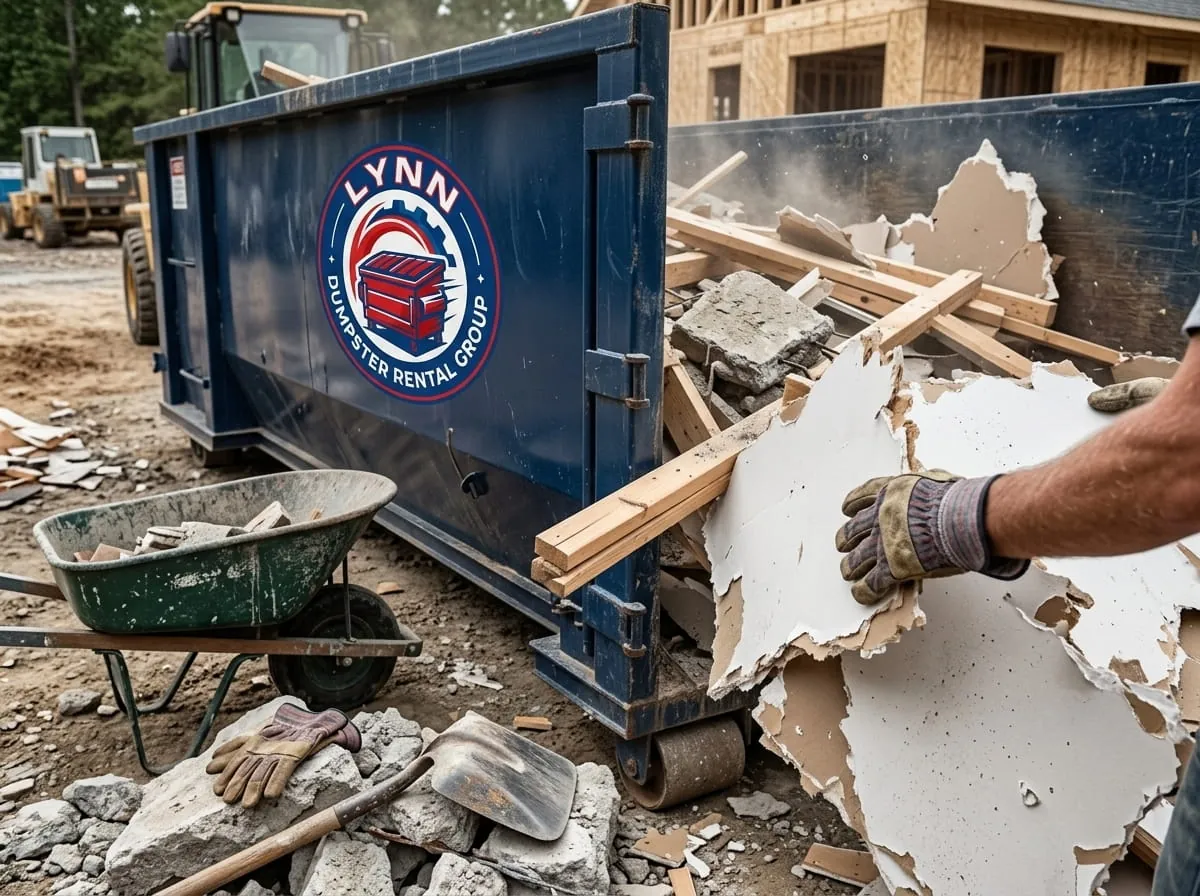
After years of dropping off and hauling away roll-off dumpsters across Lynn and the North Shore, I can tell you the number one question we field before a delivery is always the same: "So what am I actually allowed to throw in this thing?" It's a fair question. Most of what you clear out of a house, a garage, or a job site is perfectly fine. But a handful of items can get you a rejected load, a surprise fee, or worse, an environmental violation. So let's clear it up for good.
This is the honest, local version of the list. No corporate hedging, just what goes in, what stays out, and where the tricky stuff actually needs to go here in Massachusetts.
What Can Go in a Dumpster
The good news is that the vast majority of a typical cleanout or renovation is fair game. If it came out of a home or a standard remodel and it isn't hazardous, chances are it's fine. Here's the bulk of what we take every single day:
- Household junk and clutter — boxes, toys, clothing, general trash from a basement or attic cleanout
- Furniture — couches, mattresses, dressers, tables, chairs, bookshelves
- Construction and renovation debris — lumber, drywall, plaster, trim, cabinetry, subfloor
- Flooring — carpet, padding, tile, hardwood, laminate, vinyl
- Roofing — asphalt shingles, underlayment, flashing (ask us about weight — roofing gets heavy fast)
- Wood — framing lumber, plywood, fencing, decking, pallets
- Yard waste — branches, brush, leaves, sod, small stumps (see our note below on dirt and soil)
- Non-refrigerant appliances — washers, dryers, dishwashers, stoves, water heaters
- Bagged trash and general debris from moving, estate cleanouts, and foreclosures
If you're staring at a garage full of a mix of all of the above, that's exactly the kind of job our junk removal service is built for. When in doubt, a quick phone call settles it before the bin ever hits your driveway.
The simplest rule of thumb we give customers: if it's solid, non-toxic, and came out of a normal home or remodel, it almost certainly goes in the dumpster. If it's a liquid, a gas, or something that could catch fire, poison the ground, or hurt the crew handling it, it stays out.
What Can't Go in a Dumpster
This is the list that matters, because these aren't arbitrary rules. Massachusetts has some of the stricter waste regulations in the country, and the state maintains a real list of materials banned from disposal. When a prohibited item shows up in a load, the transfer station can reject the whole thing, and that cost lands on the account. So do yourself and us a favor and keep these out:
- Hazardous waste — paint, stains, solvents, pesticides, pool chemicals, cleaning chemicals
- Wet or liquid paint — latex paint must be fully dried out first; oil-based paint is hazardous, period
- Tires — banned from Massachusetts landfills and require special recycling
- Car and lead-acid batteries — corrosive and toxic
- Appliances with refrigerants — refrigerators, freezers, air conditioners, dehumidifiers
- Electronics and e-waste — TVs, computers, monitors (CRTs are banned by state law)
- Asbestos — old insulation, some floor tile and siding; strictly regulated
- Medical and biohazard waste — sharps, needles, contaminated materials
- Propane tanks and pressurized cylinders — explosion risk, even "empty" ones
- Oil, fuel, gasoline, antifreeze — any automotive or heating fluid
Why These Items Are Off-Limits
It comes down to three things: safety, state law, and the environment. A propane tank or a can of gasoline in a load that's getting compacted and hauled is a genuine fire and explosion hazard for the crew. Refrigerants from a fridge or AC unit have to be professionally recovered before the appliance can be scrapped, because those gases are damaging when they're vented into the air. And items like tires, CRT electronics, and certain paints are simply banned from Massachusetts disposal facilities outright — the state won't accept them at the landfill or incinerator, full stop.
None of this means you're stuck with the stuff. It just needs to travel a different road. Here's where it should actually go.
Where Prohibited Items Should Go Instead
| Prohibited Item | Where It Should Go Instead |
|---|---|
| Paint, solvents, chemicals | Municipal Household Hazardous Waste (HHW) collection day — Lynn and surrounding North Shore towns run these periodically |
| Latex paint (small amounts) | Dry it out fully with kitty litter or hardener, then the empty can is trash-safe |
| Tires | Tire retailers and auto shops (often for a small per-tire fee) |
| Car batteries | Auto parts stores — most take them back, often with a core credit |
| Fridges, freezers, AC units | Appliance retailers with haul-away, or scrap dealers who recover refrigerant |
| Electronics / e-waste | Certified e-waste recyclers and retailer take-back programs |
| Propane tanks | Hardware stores and propane exchange kiosks |
| Motor oil, antifreeze, gasoline | Auto parts stores and HHW collection events |
| Asbestos | Licensed asbestos abatement professionals — never DIY |
| Medical sharps | Pharmacy and clinic sharps take-back programs |
Your best resource is your town's public works or health department page, which posts the next Household Hazardous Waste collection date. Lynn and the neighboring communities schedule these throughout the year, and they'll take most of the chemical and paint items on this list in one trip.
Not sure whether that mystery can in the corner counts? Call us at (781) 560-9348 before you toss it. We'd rather answer a two-minute question than see a load get rejected.
The Heavy Stuff: Concrete, Dirt, and Brick
Here's one that trips people up, because these materials are perfectly legal to dump — they're just too heavy for a standard mixed-debris bin. Concrete, brick, asphalt, stone, dirt, and soil are dense enough that even a partially filled dumpster can blow past legal road-weight limits for the truck. That's not a technicality; an overweight roll-off can't be safely or legally hauled.
The solution is simple: heavy material goes in a dedicated bin, usually a smaller one, sized specifically for weight rather than volume. If you're tearing out an old patio, a walkway, or a foundation, our concrete and heavy debris service is exactly what you want. And don't mix it — a clean load of pure concrete or brick can often be recycled, but the moment it's tangled up with wood and trash, that option disappears.
Same logic applies to big landscaping jobs. If you're clearing brush, branches, and green waste, keeping it separate through our yard waste removal service keeps it clean and, in many cases, compostable rather than landfilled.
A Few Local Tips Before You Load
A couple of things I always mention to first-timers on the North Shore:
- Load evenly and keep it level. Debris can't stick up over the top rail — it has to be tarped for the road, and an overloaded bin can't be legally hauled.
- Break down bulky items. Snapping apart furniture and cutting down long boards buys you a surprising amount of space.
- Watch the weight with dense debris. A little concrete or wet soil goes a long way toward the weight limit.
- When you're unsure, just ask. One call saves everyone the headache of a contaminated load.
That's the whole picture. The overwhelming majority of what you're clearing out is going straight in the bin with zero fuss. It's really just that short list of hazardous, pressurized, and refrigerant-bearing items that needs a detour, and now you know exactly where each one goes.
Ready to book, or still have a question about a specific item? Take a look at everything we handle on our services page, reach out through our contact page, or just pick up the phone and call (781) 560-9348. We're local, we know exactly what the Lynn and North Shore transfer stations will and won't take, and we'll get you the right bin the first time.
Founder, Lynn Dumpster Rental Group — sharing straight advice from more than 15 years of local hauling experience.
Frequently Asked Questions
Can I put a mattress in a roll-off dumpster?
Yes, mattresses and box springs are accepted in our dumpsters along with other furniture. Some transfer stations charge a small extra fee for mattress disposal, so mention it when you book and we'll factor it in. If you have several, our junk removal service can handle them in bulk. Call (781) 560-9348 to confirm.
Why can't refrigerators and air conditioners go in the dumpster?
These appliances contain refrigerant gases that must be professionally recovered before the unit can be scrapped, because venting them into the air is harmful and against regulations. Standard washers, dryers, and stoves without refrigerants are fine. For fridges, freezers, and AC units, use an appliance retailer haul-away or a scrap dealer who recovers the refrigerant first.
What do I do with leftover paint in Lynn, MA?
Wet paint can't go in a dumpster. For latex paint, dry it out completely using paint hardener or kitty litter, and the empty, solid can is then trash-safe. Oil-based paint is hazardous and should go to a Household Hazardous Waste collection day, which Lynn and nearby North Shore towns schedule periodically through their public works or health departments.
Can I put concrete or dirt in a regular dumpster?
Concrete, brick, dirt, and soil are legal to dispose of but far too heavy for a standard mixed-debris bin — even a partially full one can exceed legal truck weight limits. These materials need a dedicated heavy-debris bin sized for weight. Keep the load clean and unmixed so it can often be recycled. Ask us about our concrete and heavy debris service.
What happens if a prohibited item ends up in my dumpster?
If a banned item like a tire, battery, or hazardous chemical is found in the load, the transfer station can reject the entire dumpster, and the extra handling or disposal cost is passed to the account. That's why we always encourage a quick call at (781) 560-9348 if you're unsure about any item before you toss it — it saves everyone the trouble.