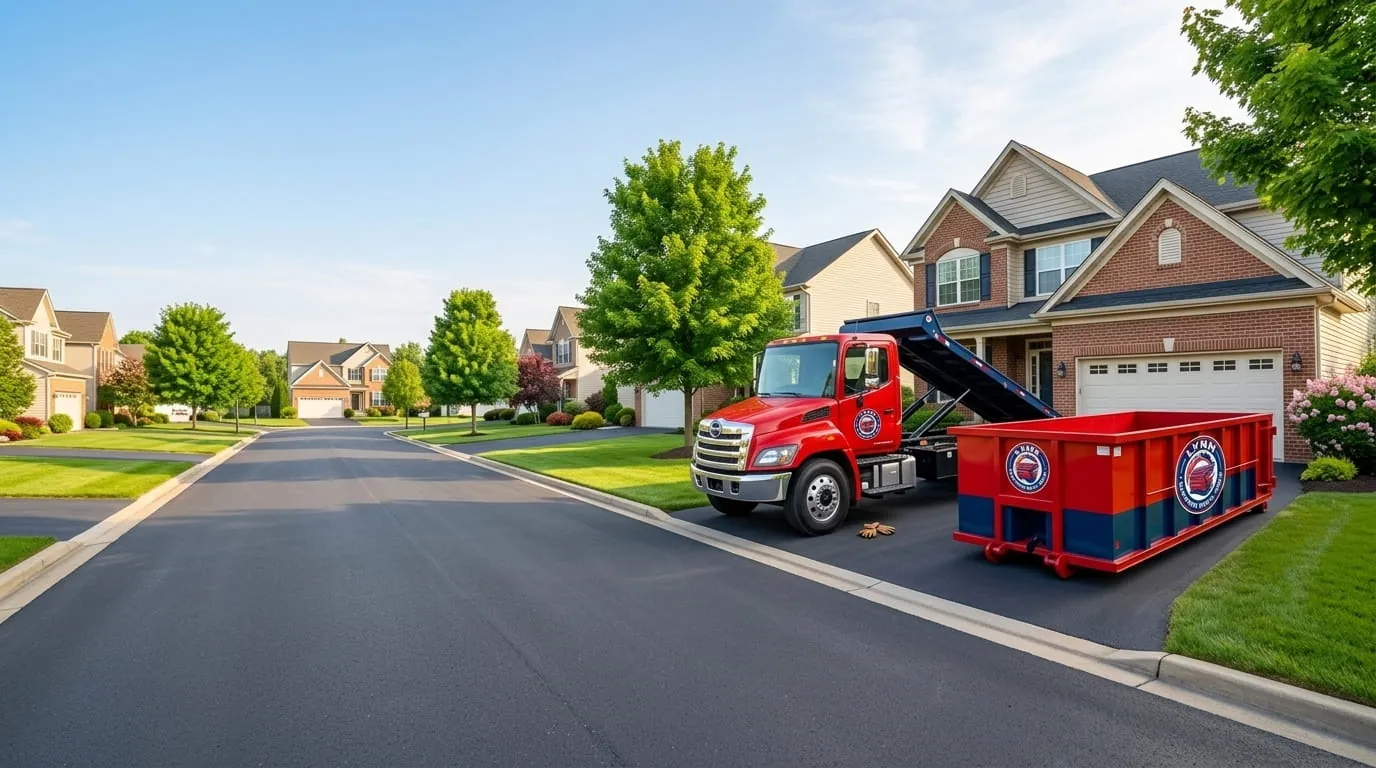
It's one of the first questions we hear when someone in Lynn books a roll-off container: “Wait, do I need a permit for this?” It's a smart thing to ask before the truck shows up, and the honest answer is the classic one: it depends on where the dumpster is going. The good news is that the rule of thumb is simple, and for most homeowners on the North Shore, no permit is needed at all.
Let's walk through when a dumpster permit in Lynn, MA actually comes into play, how to figure out where your property ends and the city's begins, and the practical steps to stay on the right side of the rules. As always, regulations and fees change, so treat this as a starting point and confirm the current details with the City of Lynn before you place anything.
The Short Answer: Private Property vs. Public Street
Here is the distinction that governs almost every dumpster placement decision:
- On your own private property — your driveway, your parking pad, a spot on your land — you generally do not need a permit. It's your property, and the dumpster sits on it temporarily.
- On a public street, sidewalk, or the city right-of-way — the strip of public land that often extends a few feet past the curb — you typically do need a permit from the city, usually handled through the Department of Public Works.
That's the whole framework in a nutshell. The vast majority of the residential jobs we handle drop the container right in a customer's driveway, and no paperwork is involved. It's the moment a dumpster has to live on the pavement out front that the city gets a say.
Quick tip: If you can fit the dumpster on your own driveway, you'll almost always avoid the permit process entirely — and save yourself the fee and the wait. When you call to book, tell us your driveway dimensions and we'll match you with a container size that fits.
Why Is Street Placement Regulated?
It might feel like bureaucracy, but street and sidewalk rules exist for real reasons. A dumpster parked on a public way is a big, heavy object sitting in shared space. The city needs to know it's there so it can manage a few things:
- Traffic and visibility. A container that narrows a travel lane or blocks a sightline at a corner is a hazard. Permits let the city keep tabs on placement.
- Emergency access. Fire trucks and ambulances need clear routes. A dumpster in the wrong spot can be a genuine problem.
- Pedestrian safety. Blocking a sidewalk forces people — including folks with strollers or wheelchairs — into the street.
- Snow and street cleaning. This is a big one in Lynn. During a snow emergency or a scheduled plow route, an unpermitted dumpster in the road is in the way of the plows, and it can be ticketed or towed. Reflectors and lighting are often required so it's visible at night.
When you pull a permit, the city knows a container is out there, roughly how long it'll stay, and that it meets their marking and placement standards. That protects you as much as it protects your neighbors.
How Do You Know Where Your Property Line Is?
This trips people up more than you'd think, because the line between “your driveway” and “the public way” isn't always obvious. A few ways to figure it out:
Check your plot plan or deed
If you bought your home, your closing documents likely include a plot plan showing your lot boundaries. That's the most reliable source.
Look at the sidewalk and curb
As a rough guide, the public sidewalk and the area between it and the curb are usually part of the city right-of-way, not your private property — even though you may mow and shovel it. Your private driveway is the paved area on your side of the sidewalk. Placing a container across the sidewalk to reach the street almost always triggers permit requirements.
When in doubt, ask
If you genuinely can't tell, the City of Lynn's Engineering or Public Works office can help clarify where your line falls. It's better to ask a quick question than to guess wrong.
Typical Steps to Get a Street or Right-of-Way Permit
If your only realistic option is the street — say you have no driveway, or it's too steep or narrow — don't worry, plenty of Lynn residents rent dumpsters this way. The process generally looks something like this, though the exact details vary:
- Contact the Department of Public Works (or the specific office the city directs you to) to request a dumpster or obstruction permit for the public way.
- Provide the basics: your address, the exact placement, the size of the container, and the dates you expect it to be out.
- Pay the applicable fee. Fees vary and change over time, so we won't quote a number here — confirm the current amount with the city.
- Meet the safety conditions, which often include reflective markings, night lighting, and keeping travel lanes and hydrants clear.
- Keep the permit accessible in case anyone from the city asks to see it during the rental.
You can review general guidance and find the right department through the City of Lynn official website, but always call to confirm the current process, because municipal procedures get updated.
Ready to line up a container? Call our team at (781) 560-9348 and we'll help you figure out whether your job needs a permit at all.
Don't Forget About HOAs and Condo Associations
Here's a wrinkle the city has nothing to do with: private rules. If you live in a condo community, a townhouse development, or a neighborhood with a homeowners association, you may need approval from your association even if the dumpster sits entirely on private property. Some HOAs restrict how long a container can stay visible, where it can go, or require advance notice. Check your association's bylaws before you book so you're not scrambling later. This is separate from — and in addition to — any city permit.
How Your Dumpster Company Can Help
You don't have to navigate this alone. A good local rental company deals with Lynn placements constantly and can point you in the right direction. Here's how we help our customers:
- We'll assess whether your driveway can accommodate the container so you can skip the permit entirely when possible.
- We can advise on which office to contact and what information you'll need if a street permit is required.
- We deliver with placement in mind — positioning the container to respect your property line and your neighbors.
Keep in mind that responsibility for pulling a public-way permit usually rests with the property owner or resident, since it's tied to your address. But we're happy to walk you through it. Explore our residential dumpster rental options or see everything we offer on our services page.
Practical Tips to Avoid Needing a Permit
Whenever it's realistic, keeping the dumpster on your own property is the path of least resistance. A few tips:
- Use the driveway. Measure the flat, usable length before you book so we can recommend a size that fits comfortably.
- Protect the surface. Roll-off containers are heavy, especially when loaded. Laying down boards under the wheels and feet helps prevent scuffs or cracks. We cover this in detail in our guide on protecting your driveway during a dumpster rental.
- Clear the path. Move cars and low-hanging obstacles so the truck can set the container exactly where you want it.
- Plan around snow season. If you're renting in winter, a driveway spot keeps you well clear of plow routes and snow-emergency rules.
A Note for North Shore Neighbors
Everything above is Lynn-specific. If you're just over the line in a neighboring community, the rules can differ — different departments, different fees, different marking requirements. For example, our neighbors in Swampscott have their own local process. Always confirm with the town or city where the dumpster will actually sit, not where you think the rules should be.
Bottom Line
For most homeowners in Lynn, renting a dumpster is refreshingly simple: put it on your driveway, and there's no permit to worry about. The moment it needs to sit on a public street or sidewalk, you'll want to check in with the City of Lynn DPW and pull the proper right-of-way permit. When you're unsure, ask — both the city and your rental company would much rather answer a question up front than sort out a problem later.
Have questions about placement, sizing, or permits for your specific address? Give us a call at (781) 560-9348 or reach out through our contact page. We're a local, family-run outfit, and we know Lynn.
Founder, Lynn Dumpster Rental Group — sharing straight advice from more than 15 years of local hauling experience.
Frequently Asked Questions
Do I need a permit to put a dumpster in my own driveway in Lynn?
Generally, no. A roll-off dumpster placed entirely on your own private driveway or property typically does not require a city permit. Permits usually only come into play when the container sits on a public street, sidewalk, or the city right-of-way. Always confirm current rules with the City of Lynn if you're unsure.
When does a dumpster in Lynn require a permit?
You typically need a permit when the dumpster is placed on a public street, sidewalk, or the city right-of-way — the shared public space the city manages for traffic, safety, and snow removal. These permits are usually handled through the Department of Public Works. Requirements and fees vary, so check with the city before placement.
Who is responsible for getting the street permit — me or the dumpster company?
Responsibility for a public-way permit usually rests with the property owner or resident, since it's tied to your address. Your rental company can advise you on the process and which office to contact, but the permit itself is generally the homeowner's to obtain. Call us at (781) 560-9348 and we'll help point you in the right direction.
How much does a dumpster street permit cost in Lynn?
Fees vary and change over time, so we don't quote exact figures here. The City of Lynn Department of Public Works can give you the current cost and requirements. In many cases you can avoid the fee entirely by placing the container on your own driveway instead of the street.
Can my HOA stop me from renting a dumpster even on my own property?
Possibly. If you live in a condo community, townhouse development, or a neighborhood with a homeowners association, private bylaws may restrict placement, duration, or require advance notice — even when the dumpster is fully on private property. This is separate from any city permit, so check your association's rules before booking.