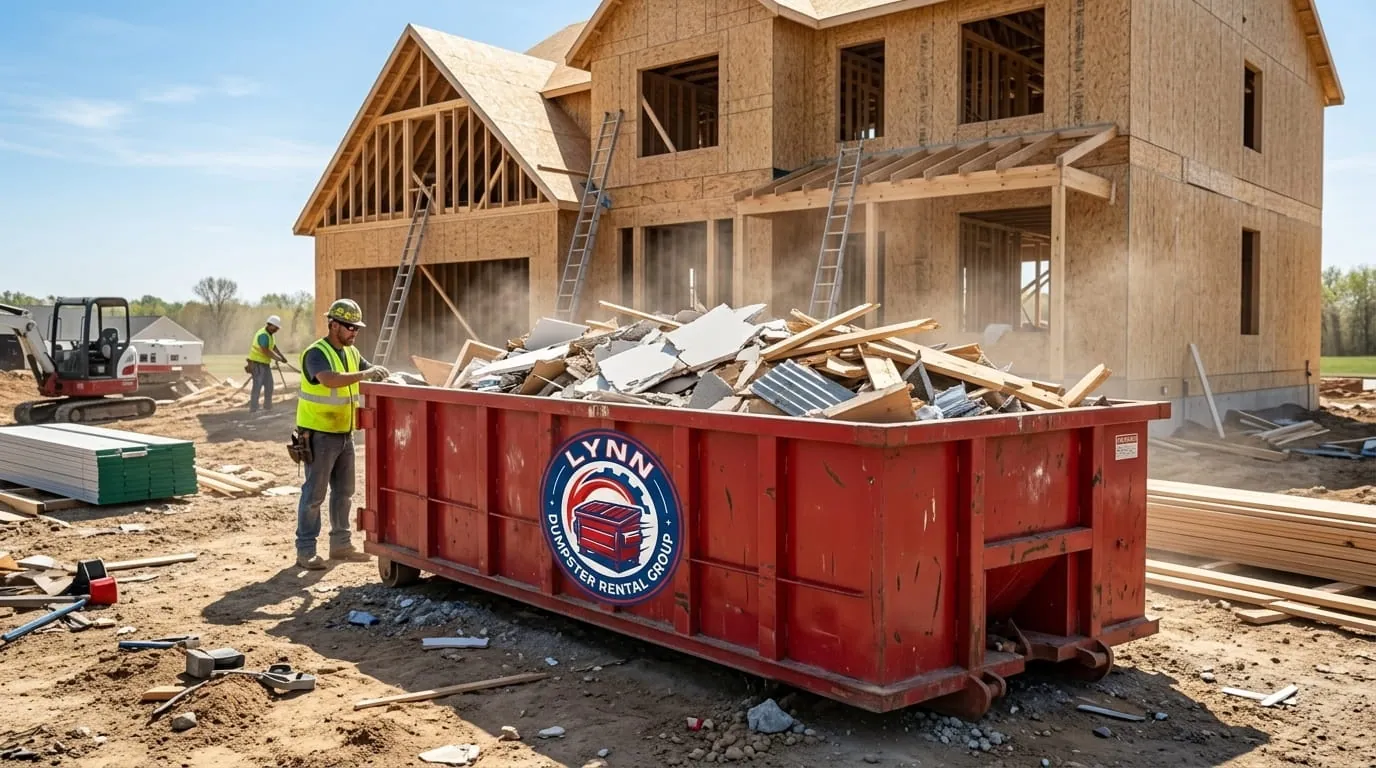
Ask any contractor what slows a job down and you'll rarely hear "the demo." It's what comes after — the piles of broken drywall, tangled wire, snapped studs, and busted-up concrete that have to go somewhere. Handle that badly and you're paying overweight fees, eating rejected loads, and losing half a day waiting on a haul. Handle it well and debris removal becomes just another line item you've already accounted for.
This is a working guide to construction debris disposal — what the waste stream actually looks like, why you can't just throw it all in one box, and how to plan hauls so your crew never stands around waiting on an empty dumpster. It's written for the North Shore, where Massachusetts disposal rules shape what you can and can't toss.
Know Your Waste Stream: The Types of C&D Debris
Construction and demolition (C&D) debris isn't one material — it's a dozen, each with its own weight, value, and rules. Before you rent anything, walk the job and picture what's coming out of it. A bathroom gut produces very different debris than a roof tear-off or a foundation dig.
The common categories:
- Wood — framing lumber, plywood, trim, subfloor. Clean, untreated wood is often recyclable; painted, treated, or engineered wood usually isn't.
- Drywall / gypsum wallboard — light but bulky, and a headache in Massachusetts (more on that below).
- Metal — studs, ductwork, conduit, copper pipe, rebar, appliances. Valuable and highly recyclable.
- Concrete, brick, block, and asphalt — heavy, dense, and best kept in a dedicated container.
- Roofing — asphalt shingles, underlayment, flashing. Heavy when wet.
- Insulation — fiberglass, foam, mineral wool. Bulky, low weight, sometimes an irritant hazard.
- Mixed finishes — flooring, tile, cabinetry, fixtures, packaging.
Once you can see the stream in categories, everything downstream — sorting, sizing, sequencing — gets easier.
Why You Can't Just Mix Everything Together
New contractors treat a dumpster like a trash can: fill it, call for a haul, done. Three problems with that.
Weight. Every roll-off has a weight allowance baked into the price. Load a 30-yard box with clean debris and you'll never hit it. Load the same box halfway with concrete and you'll blow past the limit and trigger overage charges that can rival the rental itself. Dense material and light material don't belong in the same container.
Recyclables. Metal and clean concrete have real value, and clean wood diverts easily. Bury them in a mixed load and that value is gone — plus you've paid to landfill material a recycler would have taken cheap or free.
Prohibited items. Roll-offs are for construction debris, not everything. Keep out hazardous materials, asbestos, liquids and paints, tires, batteries, propane tanks, electronics, and refrigerants-containing appliances unless you've cleared them ahead of time. A single prohibited item can get a whole load rejected at the transfer station — and rejected loads come back to you.
The cheapest debris to haul is the debris you sorted before it hit the box. Five minutes of separation on site beats an overage ticket and a rejected load every time.
Sorting for Recycling: Where the Savings Are
You don't need a full material-recovery operation on site. You need a little discipline and, ideally, the right containers. Three streams give you the biggest return for the least effort.
Metal
Pull metal out of everything. Copper, brass, and aluminum are worth stopping for; even steel studs and ductwork add up. Many scrap yards on the North Shore will take clean metal, and keeping it out of your dumpster lightens the load and frees up volume. A dedicated bin or a marked corner of the site keeps it honest.
Clean Wood
Untreated, unpainted dimensional lumber and clean plywood are recyclable and, kept separate, keep your general load lighter. Treated, painted, and composite wood goes in the general debris box — don't contaminate the clean pile or the whole thing gets downgraded.
Concrete, Brick, and Asphalt
Clean hardscape and masonry are among the easiest materials to recycle — they get crushed into aggregate and reused. But they're heavy, so they belong in their own container. For anything foundation-, slab-, or masonry-heavy, look at a dedicated concrete and heavy debris service rather than mixing it into a general roll-off.
Debris Type → Handling Guide
| Debris Type | Weight | Handling / Recycling Note |
|---|---|---|
| Clean wood (untreated) | Light–medium | Recyclable; keep separate from painted/treated wood. |
| Treated / painted wood | Light–medium | General debris box; don't contaminate clean wood. |
| Drywall / gypsum | Light, bulky | Clean gypsum is restricted in MA — confirm current rules; keep clean and dry. |
| Metal (all types) | Medium | Highly recyclable and valuable; pull out and scrap separately. |
| Concrete / brick / asphalt | Very heavy | Own container; crushed into reusable aggregate. |
| Roofing / shingles | Heavy (heavier wet) | Watch weight limits; often its own load on tear-offs. |
| Insulation | Very light, bulky | Fills volume fast; bag fiberglass to control irritants. |
| Mixed finishes / fixtures | Varies | General debris; remove appliances with refrigerant first. |
| Hazardous / asbestos / liquids | — | Prohibited in roll-offs; requires specialized disposal. |
Print it, tape it to the box, and your crew sorts without asking.
The Massachusetts Angle: C&D Disposal Bans
Massachusetts is stricter than most states about what can go to landfill or incineration, and it directly affects how you handle C&D debris. The state maintains waste bans that restrict certain materials from disposal — the list has historically included things like clean gypsum wallboard, metal, and wood, along with other recyclables and hazardous materials. The intent is to push recoverable material toward recycling rather than the landfill.
What this means on the ground: some of what you'd instinctively throw away can't legally be landfilled here, and a hauler's transfer station is watching for it. That's another reason sorting isn't optional — it's how you stay compliant. The specifics change over time, so don't rely on a rule of thumb. Confirm the current material restrictions with MassDEP before you plan disposal on a large job, and a good local hauler will already know how these bans shape what goes where.
Choosing the Right Size and Planning Swaps
Size is where jobs bleed money in both directions. Too small and you're paying for extra hauls. Too big and you're paying for air. The move is to match the box to the material and the phase.
For most mid-size renovations and gut jobs, a 30-yard dumpster is the workhorse — enough volume for bulky framing and finishes without the weight risk of a smaller box packed with dense debris. For heavy demo, keep concrete in its own smaller, weight-appropriate container so you never blow the limit. If you're unsure, size up on volume and control weight by sorting, not by squeezing everything into one box. Our construction dumpster rental team sizes this from your scope in a two-minute call.
Sequencing Hauls So the Crew Never Waits
The real skill isn't the first dumpster — it's the swap. Plan hauls around your phases: demo fills a box fast, then framing, then finishes. Call for a swap before the box is overflowing, not after, and time it to a natural break so the crew isn't standing around. On a tight urban site with no room for a second container, same-day swaps keep one clean box on the ground continuously. For larger tear-outs, coordinate with demolition debris removal so the container's there the day the walls come down.
Running a job on the North Shore? Call Lynn Dumpster Rental Group at (781) 560-9348. We set up contractor accounts and turn around same-day swaps so your crew never loses a shift waiting on a box.
Keeping the Site Safe and Compliant
Debris management is also site safety. A few habits that pay off:
- Keep walking paths clear — most job-site injuries are trips and falls, not dramatic accidents.
- Load evenly and don't exceed the fill line; overloaded boxes can't be legally or safely hauled.
- Pull protruding nails and break down long lumber so it packs flat and nobody gets caught.
- Keep the box covered or contained if it sits over a weekend — wind-blown debris and unauthorized dumping both become your problem.
- Handle insulation and dust with basic PPE; fiberglass and demo dust aren't worth the exposure.
Compliance and safety run together. The same sorting that keeps you on the right side of Massachusetts disposal rules also keeps the site organized, which keeps it safe.
Put a Plan in Place Before Demo Day
Good construction debris disposal isn't complicated, but it does reward planning. Know your waste stream, sort the valuable and restricted material, right-size the box, and sequence your hauls to the job's phases. Do that and disposal stops being the thing that slows you down.
Working a project in Lynn or across the North Shore? Get in touch or call (781) 560-9348. We'll help you size the right container, plan your swaps, and set up a contractor account so debris is one less thing you have to think about.
Founder, Lynn Dumpster Rental Group — sharing straight advice from more than 15 years of local hauling experience.
Frequently Asked Questions
What is C&D debris?
C&D stands for construction and demolition debris — the waste generated by building, renovation, and teardown work. It includes wood, drywall, metal, concrete, brick, asphalt, roofing, insulation, and mixed finishes like flooring and fixtures. Each type has different weight, recycling value, and handling rules.
Can I put concrete and general construction debris in the same dumpster?
It's not recommended. Concrete, brick, and asphalt are extremely heavy and will push a general debris box past its weight limit fast, triggering overage fees. Keep heavy material in its own weight-appropriate container. We can set you up with a dedicated concrete and heavy debris solution alongside your general roll-off.
What materials are banned from disposal in Massachusetts?
Massachusetts maintains waste bans that restrict certain recoverable and hazardous materials from landfill or incineration — historically including clean gypsum wallboard, metal, and wood, among others. The list changes over time, so confirm the current restrictions with MassDEP before planning disposal on a large job.
What size dumpster do I need for a renovation?
For most mid-size renovations and gut jobs, a 30-yard dumpster is the workhorse — enough volume for bulky framing and finishes without the weight risk of dense debris. Heavy demolition material like concrete should go in its own smaller, weight-appropriate box. Call us with your scope and we'll size it in a couple of minutes.
Do you offer contractor accounts and same-day swaps in Lynn?
Yes. Lynn Dumpster Rental Group sets up contractor accounts for repeat and multi-phase jobs, and we handle same-day swaps so your crew never loses a shift waiting on an empty box. Call (781) 560-9348 to get set up across Lynn and the North Shore.