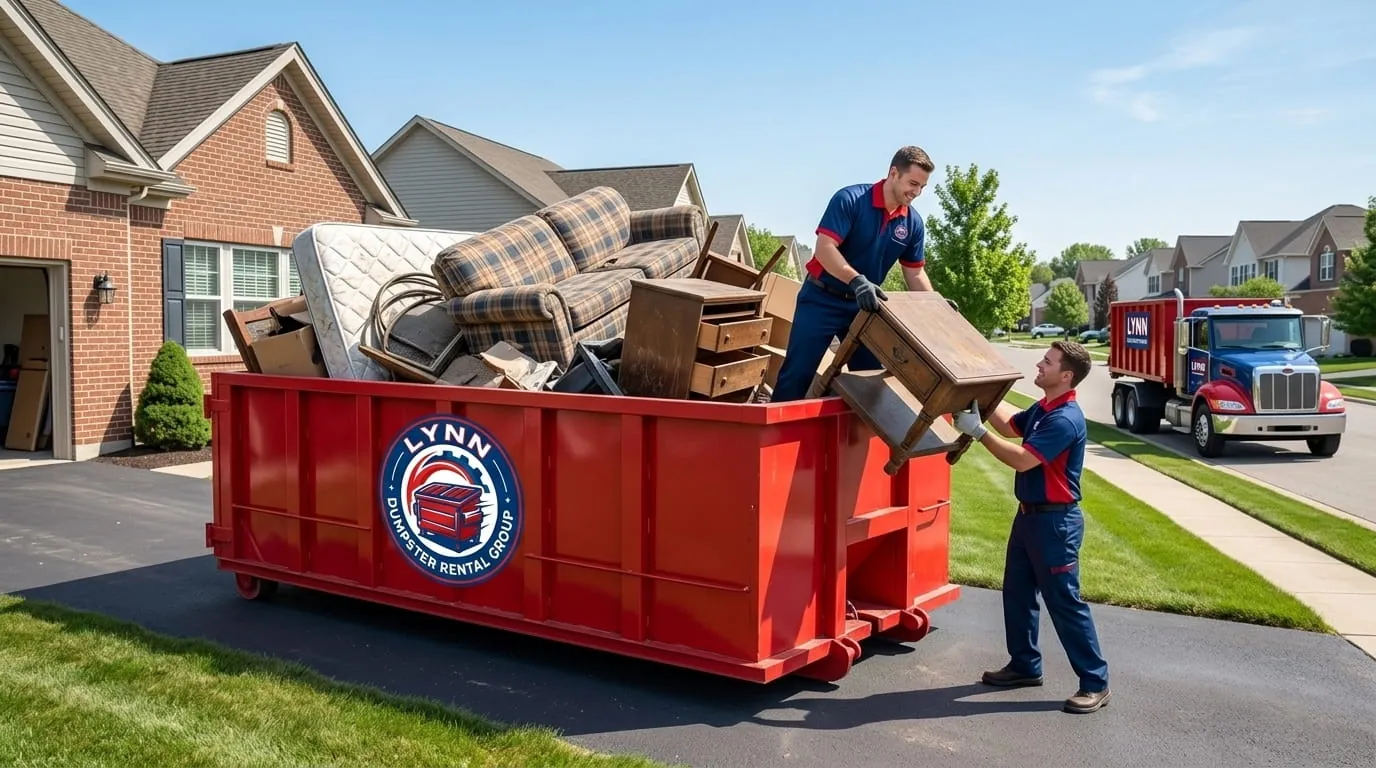
Every house in Lynn has that one room. Maybe it's the garage you haven't parked in since the Bruins were last good, or a basement where holiday decorations quietly bred into a mountain. A whole-home cleanout feels overwhelming until you break it into pieces. That's what this home cleanout checklist does: it walks you through the house one area at a time, tells you what usually piles up where, and shows you exactly where each thing should go.
We've hauled away the aftermath of a lot of North Shore cleanouts, and the folks who finish in a weekend all have one thing in common. They plan first, then they don't touch anything twice.
Before You Start: Prep Like a Pro
The difference between a cleanout that gets done and one that stalls out at noon on Saturday is almost always the setup. Give yourself an hour the night before.
Gather your supplies
- Heavy-duty contractor bags (the cheap kitchen bags will betray you)
- A few sturdy bins or boxes labeled KEEP, DONATE, SELL, RECYCLE
- Work gloves, a dust mask or N95, and closed-toe shoes
- A box cutter, markers, and painter's tape for labeling
- A hand truck or furniture dolly if you've got heavy stuff downstairs
Make a plan and get help
Pick a room order and stick to it. Start with the space that stresses you out most while your energy is highest. Recruit a friend or two; a second set of hands doubles your pace and keeps you honest when you're tempted to keep a broken lamp "just in case." And be realistic about your timeline. A single garage might be an afternoon. A full four-bedroom cleanout is a two-day job.
The one decision rule that speeds everything up
If you didn't use it in the last year, don't know you own it, or would not buy it again today at full price, it goes. Keep is the exception, not the default.
Say it out loud on every item that makes you hesitate. Hesitation is usually a no. The goal isn't a perfect museum-grade sort; it's momentum. When you handle something, make a call and move it to a pile. Don't set it back down to "decide later." Later never comes.
The Room-by-Room Cleanout Plan
The Garage
Garages are where North Shore homes hide their sins. Expect old paint cans, dried-out stain, half-used lawn chemicals, warped plywood, dead power tools, and a decade of empty cardboard boxes. Two safety notes here matter more than anywhere else in the house. First, lift with your legs and get help with anything awkward; garage junk is heavy and oddly shaped. Second, old chemicals do not go in the dumpster or the trash. Paint, solvents, pesticides, motor oil, and propane tanks are household hazardous waste. Lynn and surrounding towns run seasonal HHW collection days, so set those aside and check your city's schedule.
The Basement
Basements collect furniture nobody wanted upstairs, boxes of paperwork, old electronics, and exercise equipment used a grand total of three times. In our climate, watch for moisture. If cardboard is soft, spotty, or smells musty, treat it as a mold risk: wear your mask, don't breathe the dust, and when in doubt, toss it. A moldy box of old textbooks isn't worth your lungs. Bag the trash where it sits so you're not dragging leaky boxes up the stairs.
The Attic
Attics are seasonal-storage graveyards: broken artificial trees, faded decorations, luggage with busted zippers, and insulation-dusted mystery bins. Attic work is hot and cramped, so pick a cool morning and hydrate. Mind your footing on the joists and pass items down rather than carrying an armload down a pull-down ladder. Most of what's up there hasn't been opened in years, which makes the keep-or-go decision easy.
The Kitchen
Kitchens hide expired pantry goods, chipped mugs, warped plastic containers with no matching lids, and small appliances you forgot you owned. Donate the duplicate gadgets and the dishware you never reach for. Recycle glass, cans, and clean cardboard. Genuinely expired or spoiled food is trash. A cleared-out kitchen is the fastest win in the house and a great morale booster mid-cleanout.
Bedrooms and Closets
Clothing is the big one here, plus shoes, bedding, and nightstand clutter. Use the hanger trick: turn every hanger backward, and over the next season flip it only when you actually wear the item. Whatever's still backward come spring is a donation. Clean, wearable clothes and linens are perfect for donation. Stained, torn, or single socks are textile recycling or trash. Old mattresses often can't go in regular trash in Massachusetts due to recycling rules, so ask us how to handle those.
The Home Office
Offices breed paper: old bills, manuals for appliances you no longer own, dead pens, and a drawer of tangled cables. Shred anything with account numbers or your Social Security number. Recycle the rest of the paper. Old electronics are e-waste, not trash, and Lynn has drop-off options for that. Roll up the cables you'll never use and let them go.
Where Does Everything Go? The Quick-Reference Table
| Room | Common Items | Where It Goes |
|---|---|---|
| Garage | Old paint, lawn chemicals, motor oil, propane tanks | Household hazardous waste (never the dumpster) |
| Garage | Broken tools, scrap wood, empty boxes | Dumpster; recycle clean cardboard |
| Basement | Old furniture, gym equipment | Donate if usable; dumpster if broken |
| Basement | Moldy or water-damaged boxes | Trash / dumpster (mask on) |
| Attic | Broken decor, damaged luggage | Dumpster |
| Kitchen | Extra appliances, unused dishware | Donate |
| Kitchen | Expired food, chipped plastics | Trash; recycle glass and cans |
| Bedrooms | Wearable clothes, clean linens | Donate |
| Bedrooms | Old mattress | Mattress recycling (ask us) |
| Closets | Torn clothing, single shoes | Textile recycling or trash |
| Home Office | Sensitive documents | Shred |
| Home Office | Dead electronics, tangled cables | E-waste drop-off |
Donate vs. Junk: How to Tell the Difference
The honest test: would you give this to a friend without apologizing for it? If yes, it's a donation. Clean, working, and complete items belong at a local charity where they'll get a second life. If something is broken, stained, missing parts, or you'd be embarrassed to hand it over, it's junk, and forcing it on a donation center just makes it their disposal problem. When the donate pile is small and the junk pile is a mountain, that's exactly when a junk removal service or a driveway dumpster earns its keep.
Why a Driveway Dumpster Makes a Weekend Cleanout Realistic
Here's the trap most people fall into. They sort everything into neat piles, then realize the junk pile has nowhere to go. Weekly curbside barely takes a couple of bags, the transfer station is only open certain hours, and your car fits maybe two loads before the day's gone. Momentum dies in the driveway.
A roll-off dumpster fixes that. We drop it in your driveway, you throw junk in as you go from room to room, and we haul it away when you're done. No dump runs, no borrowing a truck, no piles rotting in the yard until next weekend. It turns a month of nagging chores into one focused push. Take a look at our residential dumpster rental options to see how it works.
What size bin do you need for a whole-home cleanout?
For most Lynn homeowners, a single room or a garage declutter fits comfortably in a 15-yard dumpster. It's low to the ground, easy to load, and won't hog the whole driveway. For a true whole-home cleanout, a downsizing project, or a multi-room job with furniture, step up to a 20-yard dumpster. It's the workhorse size for exactly this kind of weekend. Not sure which fits? Tell us what you're clearing out and we'll point you to the right one; it's better to have a little extra room than to fill up on Saturday afternoon with half the attic still to go.
Ready to knock it out? Call Lynn Dumpster Rental Group at (781) 560-9348 and we'll get a bin in your driveway.
Best Time for a Cleanout on the North Shore
Timing matters here more than in warmer parts of the country. Spring is the classic season, right after the snow clears and before the black flies show up; garages and basements air out beautifully in April and May. Early fall is the sleeper pick. September and October give you cool, dry weekends that make attic and garage work bearable, and you'll clear space before the holidays and the first storage crunch of winter. Avoid the deep-freeze months if you can, since nobody enjoys sorting boxes in an unheated garage in January.
Whatever season you pick, the formula is the same: prep the night before, work one room at a time, make fast decisions, and keep a dumpster within arm's reach so nothing piles back up. You'll be amazed how much lighter the whole house feels by Sunday night.
Planning your cleanout weekend? Call (781) 560-9348 for straightforward pricing and same-week drop-off across Lynn and the North Shore.
Founder, Lynn Dumpster Rental Group — sharing straight advice from more than 15 years of local hauling experience.
Frequently Asked Questions
What size dumpster do I need for a whole-home cleanout?
Most single-room or garage cleanouts fit a 15-yard dumpster, while a full whole-home cleanout, downsizing project, or multi-room job with furniture usually calls for a 20-yard dumpster. When in doubt, size up a little so you don't fill up mid-project. Call us at (781) 560-9348 and we'll help you choose.
What can't I put in a driveway dumpster?
Household hazardous waste stays out of the dumpster: old paint, solvents, pesticides, motor oil, propane tanks, and similar chemicals. These go to Lynn's seasonal household hazardous waste collection instead. Electronics, tires, and mattresses also have special handling; just ask us and we'll point you the right way.
How do I decide whether to keep or toss something?
Use one rule: if you haven't used it in the past year, forgot you owned it, or wouldn't buy it again today at full price, let it go. Keep should be the exception, not the default. Make the call the moment you touch an item and move it to a pile instead of setting it back down.
Should I donate or throw away my old stuff?
Ask whether you'd hand it to a friend without apologizing. Clean, working, complete items are donations. Anything broken, stained, or missing parts is junk and belongs in the dumpster rather than burdening a charity with disposal. When the junk pile dwarfs the donate pile, a driveway dumpster is the easy answer.
When is the best time to do a cleanout on the North Shore?
Spring, right after the snow clears and before black fly season, is ideal for airing out garages and basements. Early fall (September and October) is the sleeper pick with cool, dry weekends and space cleared before the holidays. Skip the deep-freeze months if you can, since sorting in an unheated garage in January is nobody's idea of fun.